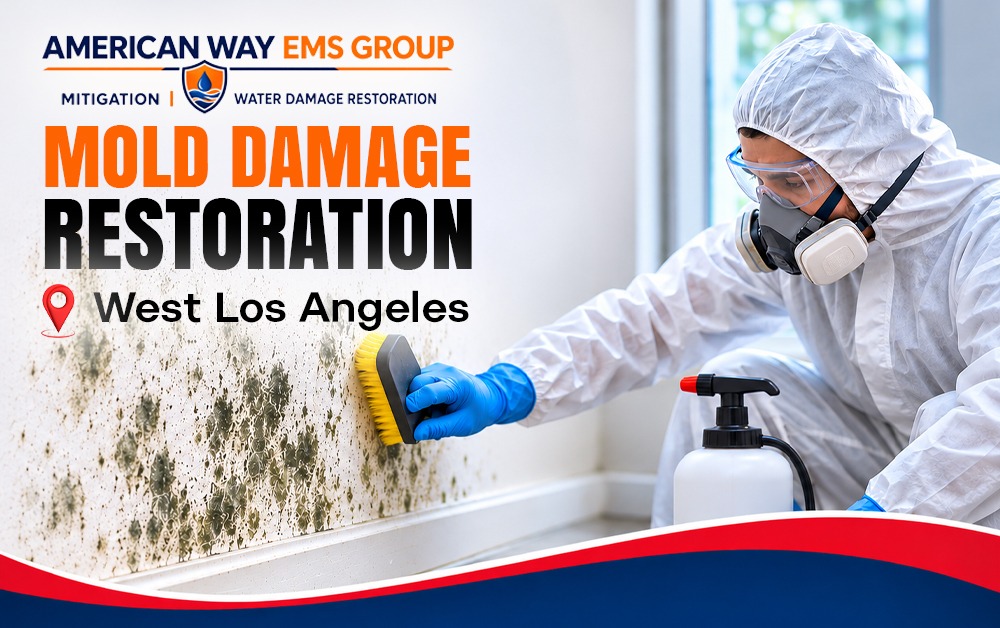
 Mold Damage Restoration
 Los Angeles is an important service for homeowners and business owners dealing with mold growth caused by water leaks, flooding, excessive humidity, plumbing problems, or prolonged moisture exposure. Mold can develop in different areas of a property, including walls, ceilings, flooring, bathrooms, kitchens, basements, crawl spaces, and HVAC systems. When moisture is not properly identified and eliminated, mold can continue spreading and cause damage to building materials, indoor air quality, and the overall condition of the property.
Mold problems are not always easy to identify because growth can develop in hidden areas behind drywall, underneath carpets, inside insulation, and around plumbing fixtures. A small water leak that appears harmless can create ongoing moisture conditions that support mold development. Without proper inspection, moisture detection, and professional cleanup, the problem may become more extensive and require additional restoration work.
Professional Mold Damage Restoration Los Angeles services help property owners identify the source of moisture, assess the extent of mold contamination, remove affected materials, and restore damaged areas. At American Way EMS Group, we provide comprehensive mold remediation and removal services for residential and commercial properties. Our restoration solutions include mold inspection, thermal imaging, hidden moisture detection, black mold removal, HEPA air filtration, odor removal, sanitization, and reconstruction of mold-damaged building materials.
Understanding Mold Damage in Residential and Commercial Properties
Mold Damage Restoration is a naturally occurring fungus that grows when moisture, suitable temperatures, and organic materials are present. Materials such as drywall, wood, carpet, insulation, paper, and ceiling tiles can provide suitable conditions for mold growth when they remain damp for extended periods.
In Los Angeles, mold problems can develop in residential and commercial buildings due to plumbing leaks, roof damage, water intrusion, poor ventilation, and HVAC moisture issues. Even properties that appear dry on the surface may contain hidden moisture inside walls, ceilings, and flooring.
One of the biggest challenges with mold damage is that it can continue developing without being immediately visible. Property owners may notice a musty odor, water stains, peeling paint, or discoloration before discovering the actual mold growth.
Professional mold inspection and remediation help identify affected areas and determine the appropriate restoration methods. Rather than simply cleaning visible mold, a complete remediation process focuses on removing contamination and correcting the moisture conditions responsible for the problem.
Common Causes of Mold Growth That Require Professional Mold Damage Restoration
Understanding what causes mold growth can help property owners recognize potential problems and take action before extensive damage develops. Most indoor mold problems are associated with unwanted moisture that remains inside building materials.
Here are some of the most common causes that may require professional Mold Damage Restoration Los Angeles services.
1. Water Damage From Leaking Pipes and Plumbing Problems
Leaking pipes are one of the common causes of hidden moisture inside residential and commercial properties. Plumbing lines located behind walls, underneath floors, and inside ceilings can develop small leaks that remain unnoticed for long periods.
Even a minor plumbing leak can continuously introduce moisture into drywall, insulation, wooden framing, and flooring. When these materials do not dry properly, mold can begin developing in the affected areas.
Professional mold remediation helps identify moisture-related damage, locate affected materials, and address the conditions contributing to mold growth. Repairing the plumbing problem and properly drying the surrounding materials are important steps in preventing recurring issues.
2. Flooding and Excessive Water Intrusion
Flooding can introduce significant amounts of water into a property within a short period. Heavy rainfall, overflowing fixtures, appliance failures, burst pipes, and drainage problems can all cause water to spread across floors, walls, and other building materials.
If the affected areas are not properly extracted and dried, moisture can remain trapped beneath flooring, inside carpets, behind baseboards, and within wall cavities. These damp conditions can encourage mold development.
Water damage restoration and mold remediation may be necessary when flooding has affected building materials. Professional assessment helps determine which materials can be dried and restored and which may require removal and replacement.
3. Roof Leaks and Ceiling Water Damage
Roof leaks are another common source of moisture intrusion. Damaged shingles, deteriorated roofing materials, flashing problems, and clogged gutters can allow rainwater to enter the building.
Water may travel through the roof structure and accumulate inside attic insulation, ceiling materials, and wall cavities. Over time, affected areas may develop water stains, peeling paint, unpleasant odors, and visible mold growth.
Professional mold damage restoration addresses the affected areas while identifying the source of water intrusion. Correcting roof leaks and drying damaged materials are essential to reducing the risk of future mold problems.
4. Poor Ventilation and High Indoor Humidity
Poor ventilation can contribute to excessive indoor humidity, especially in bathrooms, kitchens, laundry rooms, and other areas where moisture is regularly produced.
When humid air cannot circulate properly, condensation may develop on windows, walls, ceilings, and other surfaces. Continued moisture accumulation can create conditions suitable for mold growth.
Improving ventilation, controlling indoor humidity, and addressing condensation problems can help reduce the likelihood of recurring mold issues.
5. HVAC System Leaks and Condensation Problems
Heating, ventilation, and air conditioning systems can contribute to mold problems when moisture is not properly managed. Clogged condensate drain lines, leaking air conditioning components, and condensation around ductwork may introduce unwanted moisture into surrounding materials.
Mold can develop around HVAC components, vents, insulation, and nearby surfaces when damp conditions continue.
A professional assessment can help identify moisture-related problems around the system and determine whether additional cleaning, drying, or restoration is necessary.
6. Damp Crawl Spaces, Bathrooms, and Basements
Certain areas of a property are more vulnerable to moisture accumulation because of limited ventilation, plumbing connections, or exposure to groundwater.
Crawl spaces, bathrooms, basements, utility rooms, and areas beneath sinks can experience recurring moisture problems. If these spaces are not inspected and maintained, mold may develop on wooden structures, drywall, insulation, and other materials.
Regular inspections and professional moisture assessments can help identify hidden problems before they cause more extensive property damage.
Warning Signs You Need Professional Mold Remediation and Removal in Los Angeles
Mold growth is not always visible during the early stages of a moisture problem. In many cases, property owners notice changes in the condition of their building before discovering mold contamination.
Recognizing these warning signs can help you determine when professional mold inspection and removal may be necessary.
Persistent Musty Odors Inside the Property
A strong, musty smell that continues even after regular cleaning may indicate hidden moisture or mold growth. These odors can be noticeable in bathrooms, basements, closets, crawl spaces, and rooms affected by previous water damage.
Visible Mold Spots on Walls and Ceilings
Mold may appear as dark, green, brown, gray, or white patches on different surfaces. It can develop around windows, beneath sinks, on ceilings, behind furniture, and near plumbing fixtures.
Visible growth should be assessed rather than disturbed unnecessarily, particularly when the affected area is extensive.
Peeling Paint and Bubbling Wallpaper
Excessive moisture can cause paint to bubble, crack, or peel away from walls. Wallpaper may also become loose or discolored when moisture accumulates behind the surface.
These problems can indicate an ongoing water intrusion issue that may also support mold development.
Water Stains and Discoloration
Yellow or brown stains on walls and ceilings can indicate previous or ongoing water damage. If the source of moisture is not corrected, affected materials may remain damp and become vulnerable to mold growth.
Damp Carpets and Flooring
Carpets, padding, wooden floors, and subfloor materials can absorb moisture after leaks or flooding. When water becomes trapped underneath these materials, mold may develop in areas that are difficult to inspect without professional equipment.
Recurring Moisture Problems
If the same areas repeatedly become damp, develop unpleasant odors, or show signs of water damage, there may be an underlying moisture problem. Professional moisture detection can help identify the source and determine the appropriate restoration approach.
Why Professional Mold Damage Restoration Is Better Than Surface Cleaning
Discovering mold often leads property owners to consider cleaning the affected surfaces themselves. However, surface cleaning may not address the full extent of contamination, particularly when mold has developed inside porous materials or hidden building cavities.
Professional Mold Damage Restoration Los Angeles services involve a more comprehensive process that considers the source of moisture, the location of contamination, and the condition of affected materials.
Professional remediation provides several important benefits:
- Identifying hidden mold growth: Professional inspection and moisture detection help identify areas that may not be visible during a basic visual inspection.
- Controlling contamination: Appropriate containment procedures help reduce the spread of mold spores into unaffected areas during remediation.
- Removing affected materials: Mold-contaminated drywall, insulation, carpet, and other materials can be evaluated and removed when they cannot be adequately cleaned.
- Improving air quality conditions: HEPA air filtration helps capture airborne particles during the remediation process.
- Addressing moisture sources: Identifying and correcting leaks, condensation, and water intrusion helps reduce the conditions responsible for mold growth.
- Restoring damaged structures: Professional restoration can include repairing or replacing building materials affected by mold and moisture.
Cleaning visible mold without addressing the underlying moisture source can allow the problem to return. A complete remediation approach is therefore important for achieving a more effective restoration outcome.
Our Complete Mold Damage Restoration and Removal Process
Successful mold remediation requires more than removing visible mold from affected surfaces. The restoration process should identify the moisture source, control contamination, remove affected materials when necessary, and restore the damaged areas.
At American Way EMS Group, our mold damage restoration solutions focus on addressing the different stages of mold contamination and property damage.
1. Professional Mold Inspection and Property Assessment
The first step in mold remediation is evaluating the property to understand the location and extent of the problem.
Our restoration professionals assess visible mold growth, water stains, damaged building materials, and areas where moisture may have accumulated. The inspection may include bathrooms, kitchens, ceilings, wall cavities, crawl spaces, flooring, and other moisture-prone locations.
A proper assessment helps determine which areas require remediation and what restoration methods may be appropriate.
2. Thermal Imaging and Hidden Moisture Detection
Not all moisture problems are visible. Water can travel behind drywall, beneath flooring, and inside insulation without creating obvious surface damage.
Thermal imaging and professional moisture detection equipment can help identify temperature differences and moisture-related conditions that may indicate hidden water intrusion.
These tools support the inspection process by helping restoration professionals locate potential problem areas and determine whether additional investigation is needed.
3. Mold Containment and Affected Area Isolation
Before mold removal begins, affected areas may need to be isolated to help prevent contamination from spreading into other parts of the property.
Depending on the extent of mold growth, professional containment methods may include physical barriers, controlled work areas, negative air pressure, and appropriate protective equipment.
Proper containment is particularly important when mold has affected multiple rooms or larger sections of a building.
4. Black Mold Removal and Contaminated Material Cleanup
Black mold is a term commonly used to describe certain dark-colored mold growth. However, color alone cannot identify the exact mold species or determine its potential health effects.
Professional black mold removal focuses on evaluating the affected area, establishing appropriate containment, and removing or cleaning contaminated materials using suitable remediation procedures.
Depending on the extent of contamination, affected drywall, insulation, carpeting, and other porous materials may require removal and replacement.
5. Mold Cleanup From Walls, Ceilings, and Flooring
Mold can develop on different building surfaces, depending on moisture conditions and material composition.
Professional mold cleanup may involve treating and cleaning suitable nonporous or semi-porous surfaces and removing materials that cannot be adequately restored.
Common areas requiring mold cleanup include:
- Interior walls and drywall.
- Ceilings and ceiling tiles.
- Carpet and carpet padding.
- Wooden flooring and subflooring.
- Bathroom walls and surrounding fixtures.
- Kitchen cabinets and areas beneath sinks.
- Crawl spaces and insulation.
- Areas surrounding HVAC components.
The appropriate cleaning or removal method depends on the material, extent of contamination, and condition of the affected area.
Residential Mold Damage Restoration Services in Los Angeles
Mold growth can affect homes in different ways, depending on the source of moisture, building materials, and ventilation conditions. Residential properties may develop mold after plumbing leaks, bathroom moisture problems, roof damage, flooding, or air conditioning condensation.
Common residential areas affected by mold include bedrooms, kitchens, bathrooms, living rooms, attics, basements, laundry rooms, and crawl spaces.
Homeowners may notice mold around windows, beneath sinks, behind furniture, on bathroom ceilings, or inside areas affected by previous water damage.
Professional residential mold remediation focuses on identifying affected materials, controlling contamination, removing mold when necessary, and correcting the moisture conditions that contributed to the problem.
American Way EMS Group provides residential mold damage restoration solutions designed to help homeowners address mold contamination and restore affected areas of their properties.
Commercial Mold Remediation and Restoration for Businesses
Mold contamination can also affect commercial properties, including office buildings, retail stores, warehouses, restaurants, and other business facilities.
Commercial buildings may experience mold problems due to leaking plumbing systems, roof damage, HVAC moisture, poor ventilation, and water intrusion.
Because commercial properties often contain multiple rooms, shared ventilation systems, and larger building structures, identifying the extent of contamination can require a detailed assessment.
Professional commercial mold remediation helps businesses address affected areas, remove contaminated materials, and restore damaged building components.
A suitable restoration plan can help property owners and facility managers manage mold-related damage while preparing affected spaces for normal use once remediation and necessary repairs are complete.
How Long Does Mold Damage Restoration Take?
The time required for mold damage restoration depends on several factors, including the size of the affected area, the amount of mold growth, the type of building materials involved, and the source of moisture.
Smaller mold problems affecting limited surface areas may require less remediation work than extensive contamination involving multiple rooms, wall cavities, insulation, or flooring.
The restoration timeline may also depend on whether plumbing repairs, structural drying, material removal, or reconstruction is necessary.
A professional inspection is the best way to understand the extent of the damage and establish an appropriate restoration plan.
At American Way EMS Group, we assess the affected property and determine the restoration work required to address mold contamination and moisture-related damage.
Why Choose American Way EMS Group for Mold Damage Restoration Los Angeles?
Choosing the right restoration company is important when your home or business is affected by mold contamination. Effective mold remediation requires proper inspection, moisture detection, containment, cleanup, and restoration of damaged building materials.
American Way EMS Group provides professional mold remediation and removal services throughout Los Angeles and surrounding communities. Our team focuses on identifying the source of moisture, addressing mold contamination, and restoring affected residential and commercial properties.
Here is what property owners can expect from our mold restoration solutions:
- Professional Mold Inspection: Assessment of visible mold growth and moisture-affected areas.
- Advanced Moisture Detection: Thermal imaging and moisture detection equipment to help locate hidden water intrusion.
- Black Mold Removal: Appropriate containment and remediation procedures for affected areas.
- Complete Mold Cleanup: Cleanup of affected walls, ceilings, flooring, crawl spaces, and other building materials.
- HEPA Air Filtration: Air filtration methods to help control airborne particles during remediation.
- Moisture Source Correction: Identification and correction of underlying moisture problems.
- Odor Removal and Sanitization: Additional cleaning and treatment where appropriate.
- Repair and Reconstruction: Restoration of damaged drywall, insulation, carpet, flooring, and other building materials.
- 24/7 Emergency Assistance: Emergency restoration support for unexpected property damage.
Our goal is to provide dependable restoration solutions that address the cause and effects of mold damage while helping property owners return their spaces to a clean and functional condition.
Areas We Serve for Professional Mold Remediation in Los Angeles
American Way EMS Group proudly provides professional Mold Damage Restoration Los Angeles services for homeowners and businesses throughout Los Angeles and surrounding communities.
Our service areas include:
Mold Damage Restoration in Los Angeles
We provide mold remediation and removal solutions for residential and commercial properties throughout Los Angeles. Whether mold has developed after a plumbing leak, flooding, or ongoing moisture exposure, professional assessment can help identify the appropriate restoration requirements.
Mold Remediation in Orange County
Property owners in Orange County can benefit from professional mold inspection, moisture assessment, mold cleanup, and restoration services for properties affected by water intrusion and mold contamination.
Mold Removal in San Bernardino
We provide mold damage restoration solutions in San Bernardino for residential and commercial properties dealing with moisture problems, visible mold growth, and water-related building damage.
Mold Remediation in San Fernando Valley
Properties in the San Fernando Valley may experience mold problems caused by plumbing leaks, roof damage, HVAC moisture, and poor ventilation. Our restoration solutions help address affected materials and underlying moisture conditions.
Contact American Way EMS Group for Professional Mold Damage Restoration in Los Angeles
Mold damage should not be ignored, especially when it develops because of ongoing leaks, flooding, roof damage, or hidden moisture. Delaying professional remediation can allow contamination to spread and increase the amount of building material that may need to be repaired or replaced.
American Way EMS Group provides comprehensive Mold Damage Restoration Los Angeles services for residential and commercial properties. From professional mold inspection and hidden moisture detection to black mold removal, HEPA air filtration, odor treatment, and property reconstruction, our team offers restoration solutions to address different types of mold-related property damage.
Frequently Asked Questions About Mold Damage Restoration Los Angeles
1. What Does Mold Damage Restoration Include?
Mold damage restoration includes property inspection, moisture detection, mold containment, removal of contaminated materials, HEPA air filtration, surface cleaning, and structural drying. Depending on the extent of damage, restoration may also involve drywall replacement, insulation repairs, flooring restoration, and odor treatment. Professional mold remediation helps address contamination and its underlying moisture source.
2. How Long Does Professional Mold Remediation Take?
The time required for professional mold remediation depends on the size of the affected area, the severity of contamination, and the materials involved. Smaller projects may take a few days, while extensive mold damage restoration can require additional time for removal, drying, cleaning, and reconstruction. A professional inspection helps establish a suitable timeline.
3. What Are the Common Signs of Mold Growth in a Property?
Common signs of mold growth include persistent musty odors, dark spots on walls or ceilings, peeling paint, water stains, damp carpets, and recurring moisture problems. Mold can also develop behind drywall, beneath flooring, and inside insulation. Professional mold inspection in Los Angeles can help identify visible and hidden moisture-related problems.
4. Can Mold Grow After Water Damage or Flooding?
Yes, mold can develop after water damage or flooding when moisture remains trapped inside building materials. Wet drywall, carpets, insulation, and wooden structures can create conditions that support mold growth. Prompt water extraction, professional structural drying, and proper moisture control help reduce the risk of mold contamination and additional property damage.
5. Why Should I Hire a Professional Mold Removal Company in Los Angeles?
Hiring a professional mold removal company in Los Angeles helps ensure that affected areas are properly inspected, contained, and treated. Professionals use appropriate equipment for moisture detection, HEPA air filtration, and mold cleanup. They also identify underlying moisture problems and recommend necessary repairs to help prevent recurring mold growth.
