 Water Damage Restoration
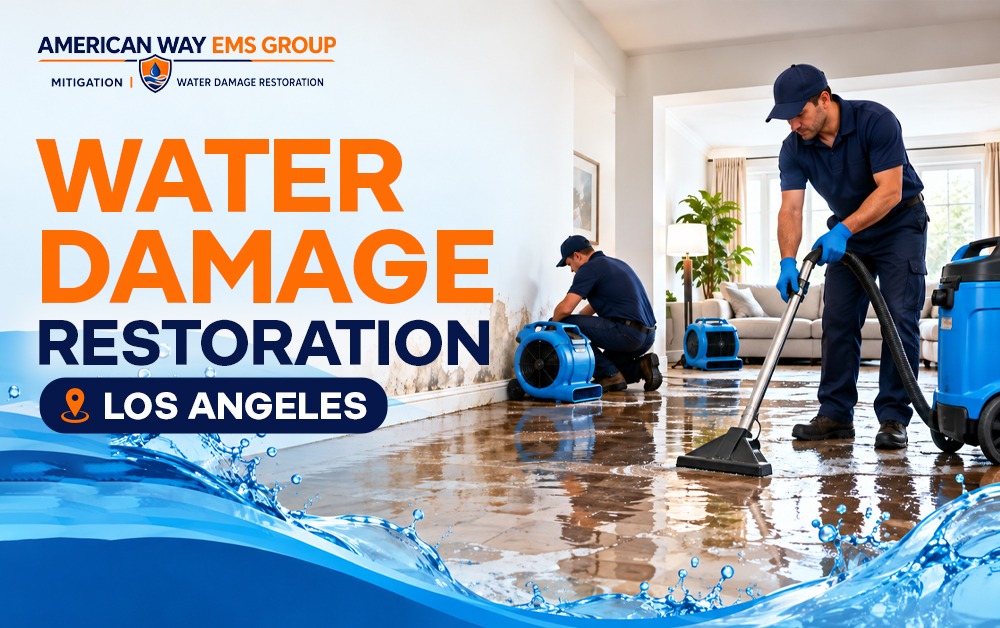
 Los Angeles is essential when a burst pipe, leaking water heater, overflowing toilet, damaged roof, or unexpected flooding causes damage to your home or business. Water can quickly spread throughout your property, damaging floors, walls, ceilings, furniture, and other valuable belongings. If moisture is not addressed promptly, it can also lead to mold growth, unpleasant odors, and further structural deterioration.
If your property has been affected by a leak or flooding, professional Water Damage Restoration Los Angeles can help identify the source of the problem, remove standing water, dry affected materials, and restore damaged areas. Acting quickly is important because water can travel beyond visible surfaces and accumulate inside walls, beneath flooring, and in other concealed spaces.
American Way EMS Group provides property restoration solutions for residential and commercial properties. Whether you are dealing with water intrusion, plumbing leaks, or flooding, understanding the restoration process can help you recognize warning signs, take appropriate action, and determine when professional Water Damage Restoration Los Angeles services may be necessary.
What Is Water Damage Restoration?
Water Damage Restoration Los Angeles is the process of addressing water-related property damage and returning affected areas to an appropriate, safe, and functional condition. Depending on the severity of the incident, the process may involve water extraction, moisture detection, structural drying, cleaning, damaged material removal, and repairs.
Professional water damage restoration in Los Angeles is especially important when water has spread into multiple rooms, soaked porous building materials, or remained unnoticed for an extended period.
A complete restoration project typically focuses on five important objectives:
- Identifying and addressing the source of the water intrusion.
- Removing standing water from affected areas.
- Detecting hidden moisture in walls, floors, ceilings, and other materials.
- Drying and cleaning affected areas using appropriate methods.
- Repairing or replacing damaged building materials when necessary.
The exact restoration approach depends on the source of the water, the amount of damage, the materials involved, and whether contamination is present. A minor plumbing leak may require a different solution than extensive flooding or a sewage backup.
Common Causes of Water Damage in Los Angeles Properties
Water damage can affect properties throughout Los Angeles County, from single-family homes and apartments to offices, retail spaces, and other commercial buildings. Although the cause may vary, even a relatively small amount of water can cause significant damage when it enters vulnerable building materials.
1. Burst and Leaking Pipes
Plumbing failures are a common cause of indoor water damage. Pipes can leak because of corrosion, loose connections, damaged fittings, excessive pressure, or aging plumbing systems.
A burst pipe can release a substantial amount of water in a short period, affecting drywall, flooring, cabinets, insulation, and nearby belongings. Slow leaks can be equally concerning because they may remain hidden behind walls or beneath sinks until visible damage appears.
Professional water damage cleanup can help remove accumulated water and assess affected areas after the plumbing problem has been corrected.
2. Roof Leaks and Ceiling Water Damage
A damaged roof, deteriorated flashing, loose roofing materials, or blocked drainage can allow water to enter a building during rainfall.
Homeowners may notice brown ceiling stains, bubbling paint, peeling plaster, damp insulation, or water dripping from light fixtures. These warning signs should not be ignored because moisture may be spreading through the roof structure or ceiling cavity.
Roof leaks should be addressed at their source, followed by an assessment of the interior damage and any necessary drying or repairs.
3. Appliance Leaks and Plumbing Overflows
Washing machines, dishwashers, refrigerators, water heaters, and other appliances can cause Water Damage Restoration Los Angeles when hoses fail, connections loosen, or internal components malfunction.
Bathrooms and kitchens are particularly vulnerable because they contain multiple water supply lines, drains, and appliances.
If an appliance leak affects surrounding cabinets, flooring, or walls, professional water extraction and drying may be necessary to prevent further deterioration.
4. Stormwater Intrusion and Flooding
Heavy rainfall can overwhelm drainage systems, expose roof weaknesses, and allow water to enter through doors, windows, foundations, and other vulnerable openings.
Floodwater may contain dirt, chemicals, sewage, or other contaminants. For this reason, flood-related damage should not automatically be treated like a clean-water plumbing leak.
Professional flood damage restoration can help determine the appropriate cleanup procedures, material handling requirements, and restoration steps.
5. Sewer Backups and Drainage Problems
A blocked sewer line or overflowing drain can introduce contaminated water into bathrooms, kitchens, utility rooms, and other areas.
Sewage-related Water Damage Restoration Los Angeles requires particular care because the affected water and materials may present health risks. Avoid direct contact and keep people and pets away from contaminated areas until qualified professionals can assess the situation.
6. Hidden Leaks and Long-Term Moisture
Not every water damage incident involves a visible flood. A small leak inside a wall, beneath a bathroom floor, or behind kitchen cabinetry may continue for days or weeks before being discovered.
Possible warning signs include musty odors, warped flooring, discolored walls, peeling paint, and unexplained increases in water usage.
If you suspect a hidden leak, identifying the moisture source early can help limit the extent of repairs and reduce the risk of secondary damage.
Why Choose Professional Water Damage Restoration in Los Angeles?
When water enters your property, wiping up the visible moisture may not be enough. Water can penetrate porous materials and remain trapped in concealed areas long after the surface appears dry.
Professional water damage restoration services help address these less visible problems through appropriate inspection, extraction, drying, and repair procedures.
Fast Water Removal Helps Limit Additional Damage
Standing water can damage flooring, furniture, drywall, baseboards, and other building components. The longer water remains in contact with these materials, the greater the potential for deterioration.
Professional water extraction equipment can remove accumulated water more efficiently than ordinary household cleaning methods.
Prompt water removal is particularly important when multiple rooms or large areas have been affected.
Moisture Detection Helps Identify Hidden Problems
Water can travel beneath flooring, into wall cavities, and behind cabinets. A surface-level inspection may not reveal the full extent of the damage.
Moisture meters and other appropriate assessment tools can help restoration professionals identify damp materials and evaluate the drying process.
This helps determine whether additional drying, material removal, or repairs may be required.
Structural Drying Helps Protect Building Materials
After water extraction, affected areas may still contain significant moisture. Professional structural drying can involve air movers, dehumidifiers, and moisture monitoring.
The objective is to bring affected materials to suitable moisture levels and reduce the risk of continued deterioration.
Drying requirements vary according to the material, temperature, humidity, and extent of water intrusion.
Mold Prevention Requires Prompt Moisture Control
Damp building materials can create favorable conditions for mold growth. Mold may develop when moisture remains unresolved, particularly in areas with limited ventilation.
Water-damaged materials should be assessed and dried or removed as appropriate, ideally within 24–48 hours when feasible.
If mold is already present or extensive contamination is suspected, additional remediation may be necessary. Simply covering stains or applying paint does not correct the underlying moisture problem.
Professional Repairs Help Restore Your Property
Some materials can be dried and retained, while others may require removal and replacement. Damaged drywall, insulation, flooring, cabinetry, and other components should be evaluated according to their condition and the type of water involved.
A well-planned restoration project addresses both the moisture problem and the resulting physical damage.
The Water Damage Restoration Los Angeles Process: Step by Step
Understanding how water damage restoration works can help you prepare for the recovery process and know what to expect from a service provider.
Step 1: Initial Inspection and Damage Assessment
The process begins with an assessment of the affected property. Restoration professionals examine visible damage, identify potential moisture pathways, and determine which areas may require further investigation.
The inspection may include:
- Identifying the apparent source of water intrusion.
- Assessing affected rooms and building materials.
- Checking for standing water and visible moisture.
- Evaluating potential electrical or contamination hazards.
- Determining whether additional moisture detection is necessary.
The findings help establish the scope of work and guide the restoration plan.
Step 2: Addressing the Source of Water
Before restoration can be completed, the source of water intrusion must be controlled.
For example, a plumber may need to repair a burst pipe, or a qualified roofing contractor may need to correct a roof leak. Flooding may require separate measures to address drainage or water entry.
Water removal alone will not prevent recurring damage if the original source remains unresolved.
Step 3: Emergency Water Extraction
Once the area can be accessed safely, standing water is removed using suitable extraction equipment.
The method depends on the volume of water, the affected surfaces, and the level of contamination.
Removing excess water helps prepare the property for the next stages of drying and cleaning.
Step 4: Structural Drying and Dehumidification
After extraction, moisture may remain inside flooring, drywall, wood, insulation, and other materials.
Air movers and dehumidifiers can help accelerate evaporation and remove excess humidity from the environment. Moisture readings may be taken during the drying process to evaluate progress.
This stage is important because materials that appear dry on the surface may still retain moisture internally.
Step 5: Cleaning and Sanitization
The appropriate cleaning process depends on the source of the water and the materials affected.
Water from a clean supply line may require different handling than water from an outdoor flood or sewage backup. Contaminated materials may require specialized cleaning, removal, and disposal.
Cleaning methods should be selected according to the actual conditions rather than applied uniformly to every water damage incident.
Step 6: Damaged Material Removal
Some water-damaged materials cannot be restored effectively. Saturated insulation, severely damaged drywall, contaminated porous materials, and certain types of flooring may need to be removed.
The decision depends on the material’s condition, contamination risk, drying potential, and applicable safety requirements.
Removing damaged materials when necessary can help prepare the property for reconstruction.
Step 7: Water Damage Repair and Reconstruction
Once the affected area has been appropriately dried and prepared, repair work can begin.
Depending on the incident, repairs may include:
- Drywall replacement and finishing.
- Flooring repair or replacement.
- Baseboard and trim replacement.
- Cabinetry repairs.
- Interior painting.
- Repairs to other affected building components.
The objective is to return the affected spaces to a functional condition while addressing the damage caused by the water intrusion.
For more information about available property restoration solutions, visit the American Way EMS Group website.
Residential Water Damage Restoration Los Angeles
Water damage in a home can affect more than the appearance of a room. It can disrupt everyday activities, damage personal belongings, and require repairs across multiple areas of the property.
Residential water damage restoration may be necessary after a burst pipe, bathroom overflow, appliance leak, roof leak, or flooding incident.
Water Damage in Kitchens and Bathrooms
Kitchens and bathrooms contain numerous plumbing connections, appliances, fixtures, and drainage points. A leaking supply line or overflowing fixture can allow water to spread beneath cabinets, into adjoining rooms, and under flooring.
Prompt inspection can help determine whether moisture has affected surrounding materials that are not immediately visible.
Water Damage in Bedrooms and Living Areas
Water may reach bedrooms and living spaces through roof leaks, plumbing failures, or water intrusion from adjoining rooms.
Carpets, upholstery, drywall, and wood flooring can absorb moisture and may require specialized drying or replacement, depending on their condition.
Basement, Garage, and Utility Room Water Damage
Where properties have below-grade spaces or utility areas, drainage problems and plumbing failures can introduce water into locations that are difficult to dry naturally.
These areas may contain electrical equipment, stored belongings, and building materials that require careful assessment.
A professional restoration plan can help determine the appropriate approach for the specific property.
Commercial Water Damage Restoration in Los Angeles
Water damage can create operational challenges for businesses, offices, retail locations, rental properties, and other commercial facilities.
In addition to physical damage, water intrusion may affect inventory, electronic equipment, documents, customer areas, and employee workspaces.
Commercial water damage restoration focuses on assessing the damage, addressing moisture problems, and planning appropriate repairs.
Protecting Business Property and Equipment
Commercial buildings may contain specialized equipment, furniture, inventory, and other valuable assets. Water exposure can damage these items and create additional recovery costs.
When it is safe to do so, documenting the damage and protecting unaffected items can help with recovery planning and insurance discussions.
Managing Property Disruption
Water damage may require certain rooms or sections of a building to remain inaccessible while extraction, drying, cleaning, or repairs are underway.
A restoration plan should consider the affected areas, safety requirements, necessary repairs, and the steps required before the space can be used again.
Supporting Property Managers and Building Owners
Property managers may need to coordinate restoration work with tenants, maintenance contractors, insurers, and other stakeholders.
A clear assessment and documented scope of work can help everyone understand the condition of the property and the next steps toward recovery.
Water Damage Restoration Across Los Angeles and Surrounding Areas
Water damage can affect properties in many communities throughout the greater Los Angeles region. Whether the problem occurs in a home, apartment, office, retail property, or other building, the appropriate restoration process depends on the location and severity of the damage.
American Way EMS Group identifies Los Angeles and surrounding areas among its service regions.
Property owners seeking restoration assistance may be interested in services covering:
- Los Angeles: Water damage cleanup, extraction, drying, and repair needs for residential and commercial properties.
- Orange County: Restoration needs arising from plumbing leaks, appliance failures, and water intrusion.
- San Bernardino: Assessment and restoration of water-damaged building materials and interior spaces.
- San Fernando Valley: Help addressing leaks, flooding, and moisture-related property damage.
- Santa Clarita: Water damage assessment and recovery following plumbing or weather-related incidents.
- Lancaster: Restoration needs involving residential and commercial water damage.
- Oxnard: Property recovery following leaks, water intrusion, and other moisture-related incidents.
- Santa Barbara: Water Damage Restoration Los Angeles assessment, cleanup, and related repair requirements.
Service availability and the specific work offered can vary by location and project. Contact American Way EMS Group to confirm whether the required services are available for your property.
How Much Does Water Damage Restoration Cost in Los Angeles?
The cost of Water Damage Restoration Los Angeles depends on several factors. There is no single price that applies to every property because the amount of water, the affected materials, and the required repairs can vary significantly.
The main factors that influence restoration costs include the following.
Extent of Water Damage
A small, contained leak may require less work than flooding that affects multiple rooms or floors. Larger incidents generally require more labor, equipment, and drying time.
Type of Water Involved
Clean water from a supply line may require different procedures than contaminated water from a sewer backup or outdoor flooding. Contamination can affect cleanup requirements, material removal, and safety precautions.
Affected Building Materials
Water-damaged carpet, hardwood flooring, drywall, insulation, cabinetry, and other materials may have different drying and replacement requirements.
Drying and Equipment Requirements
Some properties require additional equipment or longer drying periods because of the amount of moisture present, limited airflow, or concealed water intrusion.
Repairs and Reconstruction
If the incident damages walls, ceilings, flooring, or other building components, repair and replacement costs may form a substantial part of the project.
Before authorizing work, request a written estimate or scope of work that clearly identifies the recommended services, expected costs, and any exclusions. If you plan to file an insurance claim, ask your insurer about coverage and documentation requirements.
How to Prevent Water Damage in Your Los Angeles Property
Although some emergencies are unavoidable, routine maintenance and early leak detection can reduce the risk of certain water damage incidents.
Inspect Plumbing and Water Connections
Check visible pipes, faucets, supply lines, and connections for signs of leakage. Pay attention to areas under sinks and around water-using appliances.
Arrange repairs when you notice persistent drips, corrosion, or dampness.
Maintain Your Roof and Gutters
Inspect roofing materials and drainage systems for visible damage or blockages. Keeping gutters and downspouts clear can help direct rainwater away from vulnerable parts of the property.
Address roof leaks promptly rather than waiting for visible ceiling damage to worsen.
Monitor Water Heaters and Appliances
Check the area around water heaters, washing machines, dishwashers, and refrigerators for moisture or unexpected pooling.
Follow manufacturer maintenance recommendations and replace damaged hoses or connections as appropriate.
Respond to Moisture Warning Signs
Musty odors, peeling paint, warped flooring, and unexplained stains may indicate a hidden moisture problem.
Investigating these warning signs early can help reduce the likelihood of more extensive repairs.
Know Where Your Main Water Shutoff Is Located
Knowing how to shut off the water supply can be helpful when a plumbing emergency occurs. Make sure household members or responsible property staff know where the valve is located and how to operate it safely.
Prepare for Heavy Rain
Before periods of heavy rainfall, check drainage pathways, roof conditions, and vulnerable openings. Address existing leaks and ensure that water can drain away from the building as intended.
Frequently Asked Questions About Water Damage Restoration Los Angeles
1. How quickly should I arrange water damage restoration in Los Angeles?
You should arrange an assessment as soon as it is safe after discovering water damage. Prompt action can reduce continued exposure of building materials to moisture and help identify hidden damage. Where feasible, affected materials should be dried or removed appropriately within 24–48 hours to help reduce the risk of mold growth.
2. What does water damage restoration include?
Depending on the incident, restoration may include inspection, water extraction, moisture detection, structural drying, dehumidification, cleaning, damaged material removal, and reconstruction. The exact services depend on the source of water and the condition of the property.
3. How long does water damage restoration take?
The timeline varies according to the size of the affected area, the amount of moisture present, the materials involved, and the extent of necessary repairs. Drying may take several days in some situations, while extensive damage and reconstruction can take considerably longer.
4. Can water-damaged drywall and flooring be saved?
Some materials can be dried and restored, but others may need to be removed and replaced. The decision depends on the extent of saturation, the duration of exposure, the type of material, and whether the water was contaminated.
5. Can water damage lead to mold?
Yes. Persistent moisture can support mold growth on suitable materials. Promptly correcting the source of Water Damage Restoration Los Angeles, drying affected areas, and removing materials that cannot be adequately restored can help reduce the risk.
6. Does homeowners insurance cover water damage restoration?
Coverage depends on your policy and the cause of the damage. Certain sudden and accidental water damage incidents may be covered, while flood damage, gradual leaks, and maintenance-related issues may be treated differently. Review your policy and speak with your insurer for a decision specific to your circumstances.
7. Is water extraction the same as water damage restoration?
No. Water extraction focuses on removing standing water. Water damage restoration can involve additional stages, including moisture assessment, structural drying, cleaning, damaged material removal, and repairs.
8. When should I call a water damage restoration professional?
Professional assistance is particularly important when water affects multiple rooms, enters walls or flooring, remains trapped in building materials, involves contamination, or cannot be safely and thoroughly dried using appropriate methods.
9. Where can I find water damage restoration services in Los Angeles?
You can begin by visiting American Way EMS Group to learn about its property restoration services. Contact the company to confirm service availability, discuss the damage affecting your property, and determine the appropriate next steps.
Contact American Way EMS Group for Water Damage Restoration in Los Angeles
Water damage can affect the safety, appearance, and functionality of your property. From a leaking pipe or damaged appliance to roof leaks and flooding, addressing the source of the water and assessing the affected materials are essential steps toward recovery.
Professional Water Damage Restoration Los Angeles services can help property owners understand the extent of the damage and determine whether water extraction, structural drying, cleaning, or repairs are required.
American Way EMS Group offers property restoration solutions for residential and commercial restoration needs. If you have discovered water damage in your home or business, explore the company’s services and contact the team to discuss your situation.
